By: Drew Travis
Have you ever thought about how the world has progressed through various large changes? What about the common fact that although many things such as a motor vehicle, modern houses, telephones, and shoes have had large introductions or changes to them for our future’s benefit, our classrooms are still operating using the same systems as what some may classify as “Old School”? Well, if nothing much has changed in the classroom, then why do we say “Old School” and “New School”?
FHHS Intervention Specialist Brandon Meeks defines his version of New School as “Regular use of technology and an emphasis on social interaction while learning.”
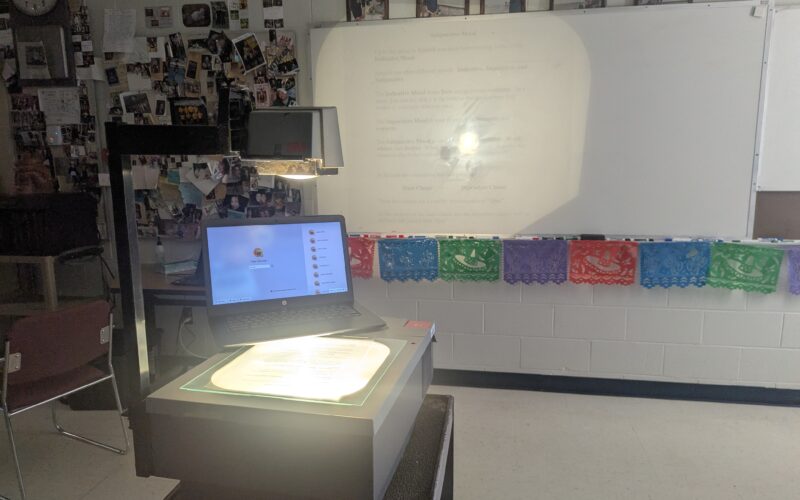
According to Middle and High School Spanish Teacher Eric Tabler, old school styled learning consists of “Text books, worksheets, use of transparencies and overhead projectors.”
Tabler wants students to be able to use the information, or language, outside of school such as on vacation or for social and mental gain. Travelling to Spanish speaking countries could be very beneficial for students.
“You can teach an old dog new tricks,” Tabler said.
Rowan Thompson, Professional Teaching Intern, said “Students deserve to feel safe and secure before they can grow.”
Thompson has mentioned Democratic Education, which is the idea that students should have a say-so in their education. With this idea, students would be more likely to engage in school work that they can have an input in, because they choose to learn what they enjoy.
High School English Teacher Valerie Forrider is preparing her daughter for her future years of school, focussing on the “New School” aspect of today’s everyday life.
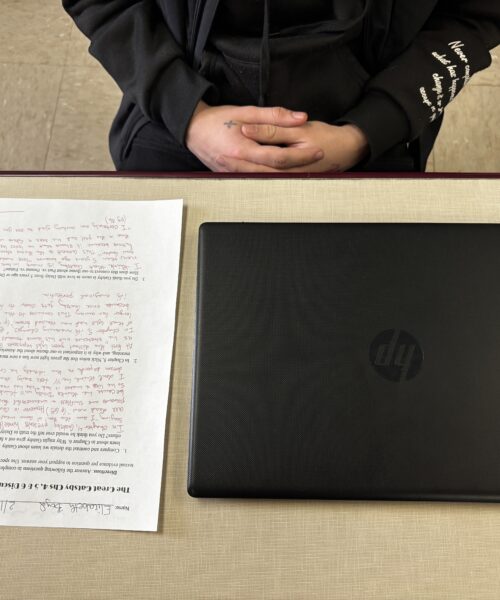
Forrider stated that for her daughter’s future learning, she looks forward to seeing “a good blend of paper and technology, instead of one or another.”
Forrider elaborated that computer work and paper work can work together in the classroom as long as it is balanced work and does not cause too much of back and forth between the two work styles.
“There is structure to everything, and integrated properly, the classroom can co-exist with older paper work schooling and newer computer work learning.”
In the future, Forrider looks forward to continued and in-depth hands-on and group activities with participation from students and staff. With the block schedule coming back to Federal Hocking schools next year, students see more time in class to individualize students’ days and prepare for a future full of learning